chudasamasantushti@gmail.com

helped a brand increase sales by 3x

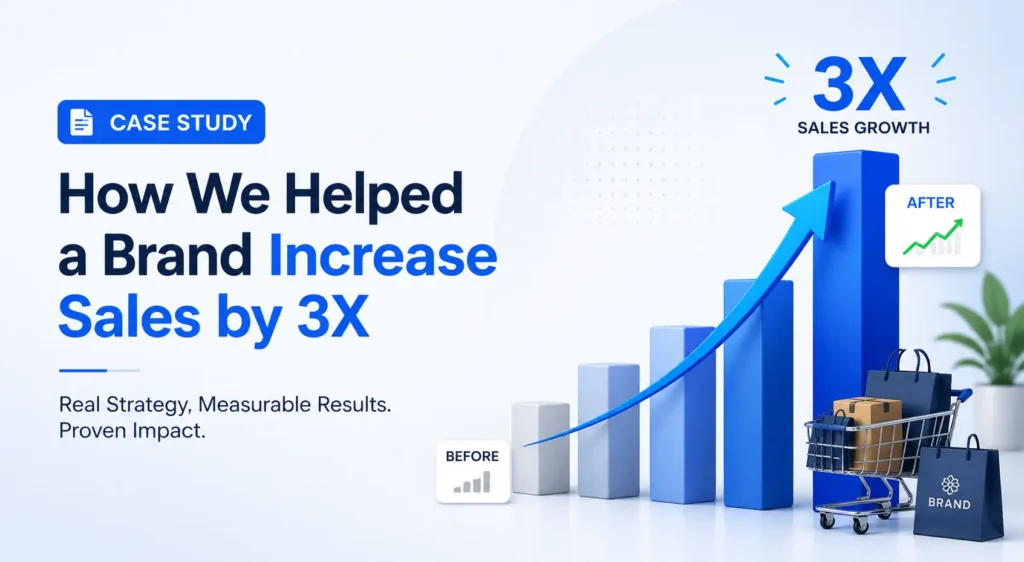
Case Study: How We Helped a Brand Increase Sales by 3X

Case Study: How We Helped a Brand Increase Sales by 3X Introduction to the Case Study Ever wondered why some brands skyrocket while others stay stuck despite spending heavily on marketing? The answer often lies not in effort—but in strategy. In this detailed case study, we’ll walk you through how a struggling brand transformed its sales performance and achieved a 3X increase in revenue using a combination of SEO, data analytics, and conversion optimization. This isn’t some vague success story filled with buzzwords. It’s a real-world breakdown of what works today. According to recent marketing insights, businesses that adopt data-driven strategies and optimized user experiences can dramatically improve conversions, sometimes even tripling them within months (KriraAI). That’s exactly what happened here. Think of this journey like fixing a leaky bucket. The brand was pouring money into ads, but customers weren’t converting. Instead of just increasing traffic, we focused on plugging the leaks—improving user experience, refining messaging, and targeting the right audience. The result? A scalable system that didn’t just boost sales temporarily but created long-term growth. Let’s dive into the full breakdown. Understanding the Brand’s Initial Challenges Poor Conversion Rates At first glance, the brand seemed to be doing fine. Website traffic was steady, social media engagement looked decent, and ad campaigns were running consistently. But when we dug deeper, the real issue became obvious—visitors weren’t converting into paying customers. This is more common than you think. Many businesses assume traffic equals success, but without conversions, traffic is just a vanity metric. Similar case studies have shown that businesses can have high traffic yet struggle due to poor conversion rates and unclear customer journeys (KriraAI). That was exactly the situation here. Users were landing on the site but dropping off quickly. Product pages lacked clarity, calls-to-action were weak, and the checkout process felt like a maze. It was like inviting customers into a store but hiding the checkout counter. Naturally, sales suffered. Lack of Data-Driven Strategy Another major issue? Decisions were based on guesswork instead of data. The brand was running ads without properly tracking ROI, making it impossible to know what was working. Research shows that companies focusing on ROI tracking and analytics can significantly improve performance and scale faster (Shtrack). Without this, marketing becomes a gamble. The brand lacked proper analytics tools, customer segmentation, and performance tracking. This meant they couldn’t identify their best-performing channels or optimize campaigns effectively. It was like driving blindfolded—moving fast but not necessarily in the right direction. Market Research & Competitive Analysis Identifying Target Audience Before making any changes, we needed to answer a critical question: Who is the ideal customer? Instead of assuming, we analyzed customer data, purchase behavior, and engagement patterns. We created detailed buyer personas that included demographics, interests, and pain points. This helped us understand not just who the customers were—but why they bought. By focusing on the right audience, we ensured that every marketing effort was laser-targeted. No more wasted ad spend. No more generic messaging. Competitor Benchmarking Next, we studied competitors. What were they doing better? Where were they failing? We analyzed their websites, ad strategies, pricing models, and content. This gave us a clear picture of industry standards and gaps we could exploit. Interestingly, we found that competitors were heavily investing in user experience and content marketing—areas where our client was lagging. This insight became a turning point in our strategy. Building a Data-Driven Strategy Implementing Analytics Tools We started by setting up advanced analytics tools to track every user interaction. From page visits to cart abandonment, everything was measured. This allowed us to identify bottlenecks in the sales funnel. For example, we discovered that a large percentage of users dropped off during checkout due to unexpected shipping costs. Defining Key Performance Indicators We established clear KPIs, including: Conversion rate Customer acquisition cost (CAC) Average order value (AOV) Return on ad spend (ROAS) Having these metrics in place transformed decision-making. Every action was now backed by data, not assumptions. Website Optimization for Conversions UX/UI Improvements We redesigned the website with a focus on simplicity and clarity. Navigation became intuitive, product pages were enhanced with better visuals, and CTAs were made more compelling. Think of it like reorganizing a messy store. Once everything is easy to find, customers naturally spend more time—and money. Speed & Mobile Optimization Speed matters more than you think. A slow website can kill conversions instantly. We optimized loading times and ensured the site was fully responsive. With mobile users accounting for a large portion of traffic, this change alone had a significant impact on sales. SEO Strategy That Delivered Results Keyword Research We conducted in-depth keyword research to identify high-intent search terms. Instead of targeting broad keywords, we focused on buyer-intent keywords that indicated readiness to purchase. On-Page SEO Enhancements We optimized meta tags, headings, and content structure. Internal linking was improved, and product descriptions were rewritten to be both engaging and SEO-friendly. The result? Increased organic traffic and better-quality leads. Paid Advertising Strategy to increase sales by 3x Campaign Structuring We restructured ad campaigns to focus on high-performing audiences. Instead of targeting everyone, we narrowed down segments based on behavior and intent. Budget Optimization Budget allocation was adjusted based on performance data. High-performing campaigns received more investment, while underperforming ones were paused. This ensured maximum ROI. Conversion Rate Optimization (CRO) A/B Testing We ran multiple A/B tests on landing pages, CTAs, and checkout flows. Data-driven testing significantly improved conversion rates. In fact, structured CRO approaches can dramatically increase sales by continuously refining user experience (webbb.ai). Customer Behavior Analysis We analyzed user behavior using heatmaps and session recordings. This revealed pain points that weren’t visible through analytics alone. Content Marketing & Branding Content played a huge role in building trust and authority. We created blog posts, guides, and product-focused content that addressed customer pain points. This not only improved SEO but also positioned the brand as an industry expert. Email & Retargeting Campaigns We implemented email marketing and retargeting strategies to re-engage potential customers. Cart abandonment emails, personalized

Case Study: How We Helped a Brand Increase Sales by 3X Read More »

5 google ads mistakes that are wasting your budget

5 Google Ads Mistakes That Are Wasting Your Budget

5 Google Ads Mistakes That Are Wasting Your Budget Introduction to Google Ads Budget Waste Why Businesses Lose Money on Google Ads Running Google Ads can feel like flipping a switch that instantly brings traffic to your business. And honestly, that’s what makes it so tempting. You set a budget, launch a campaign, and suddenly people are clicking. But here’s the uncomfortable truth—clicks don’t equal conversions, and traffic doesn’t guarantee revenue. Many businesses unknowingly pour money into campaigns that look active but quietly drain their budgets without delivering real results. The reality is that Google Ads is not a “set it and relax” platform. It’s more like a high-performance engine that needs constant tuning. Without proper strategy, targeting, and optimization, it can burn through your money faster than you expect. In fact, most advertisers don’t fail because the platform doesn’t work—they fail because they misuse it. Simple missteps in setup, targeting, or tracking can snowball into massive losses over time. Think of it like filling a bucket with holes. You keep pouring water (your budget) in, but it never fills up because leaks are everywhere. These leaks are often invisible unless you know exactly where to look. That’s why understanding the most common Google Ads mistakes is critical—not just to save money, but to actually make your campaigns profitable. Real Statistics That Show the Problem Let’s talk numbers, because they reveal just how serious this issue really is. Studies analyzing thousands of Google Ads accounts show that the average business wastes over $1,127 every month on ineffective ad spend . That’s not a small leak—it’s a steady drain that adds up to thousands annually. Even more shocking, audits often find that 30% to 60% of total ad spend is wasted on traffic that never converts . Imagine spending ₹1,00,000 on ads and realizing that nearly half of it had zero chance of generating revenue. That’s the reality for many advertisers who rely on default settings or outdated strategies. What’s worse is that this waste is usually not obvious. Campaign dashboards may show impressions, clicks, and even engagement. Everything looks “fine” on the surface. But underneath, your budget might be going toward irrelevant searches, poorly targeted audiences, or ineffective ads. The system doesn’t warn you—it just keeps spending. The good news? Most of this waste comes from a handful of repeatable mistakes. Fix those, and you can dramatically improve your ROI without increasing your budget. Let’s dive into the five biggest culprits. Mistake #1: Targeting the Wrong Keywords The Danger of Broad Match Keywords One of the fastest ways to burn your Google Ads budget is by targeting the wrong keywords—especially using broad match without control. It might seem like a good idea at first. After all, broader keywords mean more reach, right? But in reality, they often attract the wrong audience. For example, if you run ads for “digital marketing services” and use broad match, your ad might show up for searches like “free marketing courses” or “what is digital marketing.” These users are not ready to buy—they’re just browsing or learning. Yet, every click still costs you money. This is where things get dangerous. Broad match gives Google a lot of freedom to decide when your ads appear. While the algorithm is powerful, it’s not perfect. Without proper control, it can match your ads to irrelevant queries, leading to wasted spend and low conversion rates. Research shows that a significant portion of wasted budget comes from irrelevant or low-intent searches triggered by poor keyword targeting . How to Choose High-Intent Keywords Fixing this mistake starts with being intentional about your keyword strategy. Instead of going broad, focus on high-intent keywords—the ones people search when they’re ready to take action. These often include specific phrases like “buy,” “hire,” “near me,” or detailed product names. You should also use match types strategically: Exact match for precise targeting Phrase match for controlled flexibility Limited use of broad match with strong monitoring Think of keywords like fishing nets. A wide net catches everything—good and bad. A targeted net catches exactly what you want. By refining your keyword selection, you reduce wasted clicks and attract users who are more likely to convert. Mistake #2: Ignoring Negative Keywords What Are Negative Keywords and Why They Matter If keywords tell Google when to show your ads, negative keywords tell it when NOT to show them. And surprisingly, many advertisers completely ignore this feature. That’s like driving without brakes—you might move forward, but you have no control over where you stop. Without negative keywords, your ads can appear for irrelevant searches. For instance, if you sell premium products, you don’t want clicks from people searching for “cheap” or “free.” Yet, without exclusions, those clicks will still happen—and you’ll pay for them. Industry insights suggest that 20% to 30% of ad spend is often wasted due to irrelevant searches that could have been filtered out with negative keywords . That’s a huge chunk of your budget going nowhere. Simple Steps to Build a Strong Negative Keyword List Building a strong negative keyword list isn’t complicated, but it does require consistency. Start by reviewing your search terms report regularly. This report shows exactly what users typed before clicking your ad. Look for patterns: Searches that don’t match your offering Informational queries with no buying intent Irrelevant industries or audiences Add these as negative keywords at the campaign or ad group level. Over time, your list will grow, and your targeting will become sharper. Think of it as trimming the fat—removing everything that doesn’t contribute to conversions.   Mistake #3: Poor Conversion Tracking Why Tracking Is the Backbone of ROI Imagine running ads without knowing which ones actually generate sales. Sounds risky, right? Yet, many businesses do exactly that. Poor or missing conversion tracking is one of the biggest reasons Google Ads budgets go to waste. Without accurate tracking, you’re essentially flying blind. You might think a campaign is performing well because it gets clicks, but those clicks might

5 Google Ads Mistakes That Are Wasting Your Budget Read More »

10 Proven Ways to Generate Leads Online (2026 Guide)

10 Proven Ways to Generate Leads Online

10 Proven Ways to Generate Leads Online (2026 Guide) What Is Lead Generation? SEO is the silent powerhouse of lead generation. Unlike ads, it doesn’t stop working when you stop paying. It builds momentum over time. One of the most effective strategies today is targeting long-tail keywords—specific phrases that people search when they’re closer to making a decision. These keywords may have lower search volume, but they often have higher conversion rates. Here’s the interesting part: SEO delivers leads at an average cost of just $31 per lead, making it one of the most cost-effective channels (LeadResponse). Compare that to paid ads, and you’ll see why businesses invest heavily in SEO. Method 1: Content Marketing That Converts Blogging and SEO Strategy Content marketing is like a magnet. When done right, it pulls people toward your business without you having to chase them. And here’s the kicker—it’s still one of the most powerful lead generation strategies today. Blogging, in particular, plays a massive role. Companies that blog regularly generate 13x more leads than those that don’t (LeadResponse). That’s not a small difference—it’s a game changer. Why? Because blogs answer questions, solve problems, and build authority. Think about how you search online. You type a question into Google, click on an article, and if it helps you, you trust that website more. That’s exactly how content marketing works. You’re not selling—you’re helping. And in return, people are more willing to give you their email or explore your services. The key here is SEO (Search Engine Optimization). It ensures your content actually gets seen. Focus on keywords your audience is searching for, create valuable content around those topics, and optimize your pages for search engines. Over time, this creates a steady stream of organic traffic—and leads. Method 2: Social Media Lead Generation Best Platforms for Leads Social media isn’t just for scrolling anymore—it’s a powerful lead generation machine. In fact, 68% of marketers say social media helps them generate leads (DesignRush). But not all platforms are created equal. If you’re in B2B, LinkedIn is your goldmine. It’s where professionals hang out, network, and make decisions. For B2C, platforms like Instagram, Facebook, and even TikTok can drive massive engagement and leads. The key is understanding where your audience spends their time. But here’s where most people go wrong—they focus on posting instead of engaging. Lead generation on social media is about building relationships, not just broadcasting messages. Reply to comments, start conversations, and provide value consistently. Imagine social media as a digital coffee shop. You wouldn’t walk in and immediately start selling to strangers, right? You’d chat, connect, and build rapport. That’s exactly how you should approach social media lead generation. Method 3: Email Marketing Funnels Building High-Converting Lists Email marketing might sound old-school, but it’s still one of the highest ROI channels out there. Why? Because you own your email list—unlike social media platforms that can change algorithms anytime. Studies show that email marketing drives 88% of B2B lead generation efforts (popupsmart.com). That’s huge. But success here isn’t about blasting emails—it’s about building a funnel. Start by offering something valuable in exchange for an email—like a free guide, checklist, or discount. Then, nurture your leads with a series of emails that educate, engage, and gradually introduce your offer. Think of it like dating. You don’t propose on the first date, right? You build trust over time. Email marketing works the same way. Method 4: Search Engine Optimization (SEO) Long-Tail Keywords Strategy Social media isn’t just for scrolling anymore—it’s a powerful lead generation machine. In fact, 68% of marketers say social media helps them generate leads (DesignRush). But not all platforms are created equal. If you’re in B2B, LinkedIn is your goldmine. It’s where professionals hang out, network, and make decisions. For B2C, platforms like Instagram, Facebook, and even TikTok can drive massive engagement and leads. The key is understanding where your audience spends their time. But here’s where most people go wrong—they focus on posting instead of engaging. Lead generation on social media is about building relationships, not just broadcasting messages. Reply to comments, start conversations, and provide value consistently. Imagine social media as a digital coffee shop. You wouldn’t walk in and immediately start selling to strangers, right? You’d chat, connect, and build rapport. That’s exactly how you should approach social media lead generation. Method 5: Paid Advertising (PPC) Google Ads vs Social Ads If SEO is a long-term strategy, paid ads are your shortcut. Platforms like Google Ads and Facebook Ads allow you to reach your target audience instantly. But here’s the catch—costs are rising. Businesses are seeing increased competition and higher cost-per-click. That means you need to be strategic. Google Ads works best for capturing intent—people actively searching for solutions. Social ads, on the other hand, are great for creating demand and awareness. Method 6: Landing Pages Optimization Conversion Rate Best Practices A landing page is where the magic happens. It’s where visitors turn into leads—or leave. The average landing page conversion rate is around 6.6% (LeadResponse). That means most visitors don’t convert. Your job is to improve that. Focus on clear headlines, compelling offers, and simple forms. Remove distractions and guide users toward one action. Method 7: Lead Magnets That Work Types of High-Converting Lead Magnets Lead magnets are incentives you offer in exchange for contact information. The better your lead magnet, the more leads you’ll get. Popular options include: eBooks Checklists Free trials Webinars The key is relevance. Your lead magnet should solve a specific problem for your audience. Method 8: Influencer & Partnership Marketing Leveraging Trust for Leads Influencer marketing is evolving fast. In 2026, brands are focusing on long-term partnerships rather than one-off promotions. This builds deeper trust and better results. People trust people more than brands. When an influencer recommends something, it feels authentic. Method 9: Webinars and Live Events Engagement-Based Lead Capture Webinars are one of the best ways to generate high-quality leads. Why? Because attendees are already interested in your topic. They

10 Proven Ways to Generate Leads Online Read More »

latest digital marketing trends in 2026

Latest Digital Marketing Trends in 2026

Latest Digital Marketing Trends in 2026 Introduction to Digital Marketing Evolution Why 2026 is a Turning Point If you’ve been in the marketing world for even a few years, you’ve probably noticed something: things aren’t just evolving—they’re accelerating at a crazy pace. And 2026? It’s not just another year. It’s a full-blown turning point. The rules that worked even two years ago are now either outdated or dangerously ineffective. Why? Because the entire ecosystem—search engines, user behavior, and technology—has fundamentally shifted. One of the biggest disruptors is artificial intelligence. Today, nearly 800 million people use AI tools weekly to search, compare, and make decisions . That means your audience is no longer just Googling—they’re asking AI for direct answers. This completely changes how brands get discovered. Instead of fighting for clicks, businesses now compete for visibility inside AI-generated answers. At the same time, organic traffic has become unpredictable. Reports show that AI-driven search features have reduced website traffic by 15% to 64% in some industries . That’s huge. Imagine putting in all the effort to rank #1, only to find users never even click your link because they already got their answer from AI. So yeah, 2026 isn’t business as usual. It’s a reset button.   The Shift from Traditional to AI-Driven Marketing Let’s be honest—traditional marketing funnels are slowly fading away. You know the old model: awareness → consideration → decision. In 2026, that neat little funnel looks more like a chaotic web. People jump straight from discovery to purchase because AI has already done the “consideration” work for them. AI isn’t just helping marketers anymore—it’s replacing entire chunks of the process. From content creation to audience targeting and even campaign optimization, AI tools are now deeply embedded in marketing workflows. According to industry insights, AI is transitioning from a support tool to a decision-making system . But here’s the twist: while AI makes everything faster, it also makes everything more competitive. When everyone can generate content instantly, what really stands out? Authenticity. Original thinking. Human insight. Think of AI like a high-speed train. It can take you far, fast—but you still need to decide where you’re going. And in 2026, the brands that win are the ones that combine AI efficiency with human creativity. AI as the Core of Marketing Strategies Rise of AI Agents in Marketing AI has officially graduated from being just a “tool” to becoming something much more powerful: a digital coworker. In 2026, AI agents are handling tasks like customer interactions, campaign optimization, and even strategic planning. Experts predict that nearly half of enterprise applications will include AI agents this year . These aren’t your basic chatbots anymore. We’re talking about systems that understand context, learn from behavior, and take action automatically. Imagine launching a campaign where the AI adjusts targeting, messaging, and budget in real time—without human intervention. That’s not futuristic anymore. That’s happening now. For marketers, this means less manual work and more focus on strategy. But it also raises a big question: how much control are you willing to give up? Because as AI becomes more autonomous, the line between human decision-making and machine optimization starts to blur. AI Content vs Human Creativity Here’s a hard truth: AI-generated content is everywhere in 2026. In fact, some reports suggest that a majority of new web content is now AI-assisted or fully generated. But does that mean human writers are obsolete? Not even close. If anything, the rise of AI content has made human creativity more valuable than ever. Why? Because AI is great at producing “average” content. It follows patterns, predicts language, and delivers safe, structured outputs. But it struggles with originality, emotion, and bold perspectives. Think about it like fast food vs home-cooked meals. AI content is quick, consistent, and scalable. But human content? That’s where the flavor is. That’s what people remember. In 2026, the smartest marketers aren’t choosing between AI and humans—they’re combining both. AI handles the heavy lifting, while humans add personality, storytelling, and depth. The Era of Zero-Click Searches What is Zero-Click Marketing Have you ever searched for something and found your answer instantly—without clicking any link? That’s zero-click search. And in 2026, it’s becoming the norm rather than the exception. AI-powered summaries now answer most user queries directly on the search page. Studies show that a growing percentage of searches end without a single website visit . For businesses, this is both a challenge and an opportunity. On one hand, fewer clicks mean less traffic. On the other hand, being featured in those AI summaries can massively boost brand visibility. It’s like having your brand recommended by a trusted assistant. Impact on SEO Strategies Traditional SEO focused on ranking high and driving clicks. But in 2026, that’s no longer enough. Now, the goal is to be the source of the answer. This shift has given rise to new strategies like structured content, direct answers, and data-driven formatting. Content needs to be clear, concise, and easy for AI systems to extract. Here’s a quick comparison: Traditional SEO 2026 SEO (AI-Driven) Focus on rankings Focus on visibility in AI answers Keyword density Context and intent clarity Backlinks matter most Entity authority and trust signals Click-through rate Answer inclusion rate If your content isn’t optimized for AI, it’s basically invisible. Answer Engine Optimization (AEO) Difference Between SEO and AEO Let’s clear something up: SEO isn’t dead. It’s evolving. And its new form is called Answer Engine Optimization (AEO). While SEO focuses on ranking pages, AEO focuses on getting your content selected as the answer. It’s subtle, but powerful. Instead of asking, “How do I rank #1?” you ask, “How do I become the answer?” How to Optimize for AI Answers To succeed in AEO, your content needs to: Provide clear, direct answers Use structured formats like tables and lists Include real data and statistics Match user intent precisely AI systems prefer content that is easy to parse and trustworthy. So if your content is messy, vague, or overly

Latest Digital Marketing Trends in 2026 Read More »

orange economy in india

Orange economy in India 2026: How creativity is becoming the country’s next growth engine

Orange economy in India 2026: How creativity is becoming the country’s next growth engine The orange economy in India is no longer just a buzzword used in policy reports or creative conferences. It has quietly become one of the most exciting and fast-evolving parts of the Indian economy. From designers, musicians, filmmakers, and writers to content creators, game developers, and digital artists, creativity is turning into serious economic value. What was once seen as “passion work” is now a powerful contributor to jobs, entrepreneurship, exports, and cultural influence. India, with its deep cultural roots and massive youth population, is uniquely positioned to benefit from the orange economy. Creativity here is not new—it has existed for centuries in the form of art, craft, music, dance, storytelling, and cinema. What is new is the way technology, platforms, and global demand have transformed creativity into scalable business opportunities. The orange economy in India is proving that ideas, culture, and imagination can be just as valuable as factories and infrastructure. Understanding the Concept of Orange Economy in India To understand the orange economy in India, it is important to first know what the orange economy actually means. The term refers to economic activities that are based on creativity, culture, knowledge, and intellectual property. This includes industries like media, entertainment, advertising, fashion, design, gaming, animation, publishing, architecture, crafts, and digital content creation. In the Indian context, the orange economy blends traditional culture with modern innovation. A classical dancer using Instagram, a handicraft seller running a global Etsy store, or a YouTuber building a personal brand are all part of this economy. Unlike traditional industries that rely heavily on raw materials, the orange economy runs on human talent, originality, and storytelling. What makes India special is that creativity is deeply embedded in everyday life. Festivals, languages, films, music, and regional art forms give India a massive creative base. When this cultural wealth meets digital tools and market access, it creates economic value at scale. Why the Orange Economy in India Is Growing So Fast The rapid growth of the orange economy in India did not happen by accident. Several factors have come together to create the perfect environment for creative industries to flourish. One of the biggest drivers is digital access. Affordable smartphones and low-cost internet have allowed millions of Indians to create, share, and monetize content. Another major reason is the rise of platforms. YouTube, Instagram, Spotify, OTT platforms, gaming apps, and creator marketplaces have removed traditional entry barriers. Earlier, a singer needed a big music label or a filmmaker needed a studio backing. Today, talent can reach audiences directly. This democratization of creativity has unlocked income opportunities for people across cities, towns, and even villages. Additionally, changing consumer behavior has played a huge role. Indian consumers now spend more on experiences, entertainment, fashion, and digital content. Brands are also investing heavily in creative storytelling, influencer marketing, and visual design, further strengthening the orange economy in India. Key Sectors Driving the Orange Economy in India The orange economy in India is not limited to one or two industries. It is a broad ecosystem supported by multiple creative sectors working together. Media and entertainment remain at the core. Indian cinema, OTT content, music streaming, and regional content are gaining both domestic and global audiences. Fashion and design are also major contributors, with Indian designers blending tradition with contemporary aesthetics and reaching international markets. Another fast-growing area is digital content creation. Bloggers, podcasters, gamers, educators, and influencers are building full-time careers. Animation, gaming, and VFX are also expanding rapidly, supported by global outsourcing and rising domestic demand. Traditional crafts and handloom sectors are finding new life through e-commerce and social media, allowing artisans to sell directly without middlemen. Together, these sectors form a vibrant creative economy that supports millions of livelihoods while shaping India’s cultural identity. Role of Government and Policy in Supporting the Orange Economy in India Government initiatives have started playing an important role in strengthening the orange economy in India. Programs like Startup India, Digital India, and Skill India indirectly support creative professionals by improving digital infrastructure, funding access, and skill development. There is also growing recognition of intellectual property rights. Copyrights, trademarks, and design protections are crucial for creative workers, as their ideas are their biggest assets. Improved IP awareness helps creators protect and monetize their work more effectively. Institutions, cultural missions, and export councils are promoting Indian art, cinema, and crafts globally. While there is still room for improvement, policy-level attention has begun shifting toward recognizing creativity as a serious economic contributor rather than a side activity. Employment and Entrepreneurship Opportunities in the Orange Economy in India One of the most powerful aspects of the orange economy in India is its ability to generate employment. Unlike capital-heavy industries, creative sectors are labor-intensive and inclusive. A single creative project often supports multiple roles—writers, designers, editors, marketers, technicians, and freelancers. Entrepreneurship is another major benefit. Many creative professionals operate as solopreneurs or small business owners. They build personal brands, launch studios, create digital products, or start niche agencies. This flexibility is especially attractive to young Indians who want independence and purpose-driven careers. The orange economy also opens doors for women, rural talent, and marginalized communities by reducing geographic and social barriers. All that is needed is skill, creativity, and access to digital tools. Challenges Faced by the Orange Economy in India Despite its potential, the orange economy in India faces several challenges. Income instability is one of the biggest concerns. Many creative professionals lack predictable earnings, social security, or long-term financial planning. Another issue is lack of formal recognition. Creative careers are still not taken seriously in many households and institutions. Access to funding remains limited, especially for early-stage creators and artists who do not fit traditional business models. Skill gaps also exist. While talent is abundant, business knowledge, pricing skills, contract awareness, and digital marketing capabilities are often missing. Addressing these challenges is essential for making the orange economy sustainable and scalable.

Orange economy in India 2026: How creativity is becoming the country’s next growth engine Read More »